
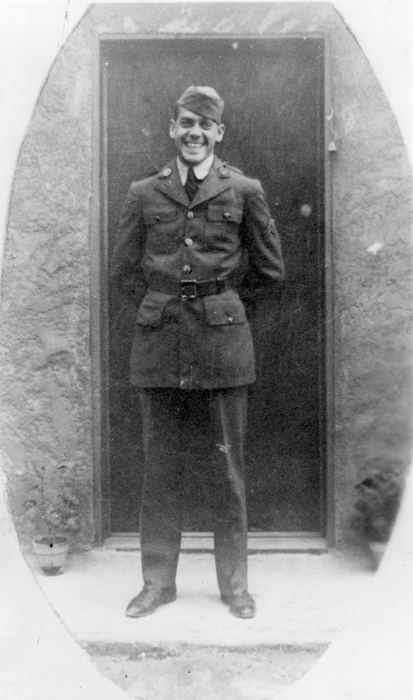
Corporal William Earle “Billy” Love
William Earle Love was born on January 6, 1919 to Earl and Mabel Love. He was raised in Deming NM and graduated from Deming HS in 1939. He attended NMAMC for one year.
In the spring of 1940, the 111th Cavalry of the NM National Guard was converted to the 200th Coast Artillery Regiment and on January 6, 1941, he and the other members were inducted into federal service and immediately sent to the Anti-Aircraft Training Center at Fort Bliss, Texas. In August, the 200th CA was dispatched to the Philippines.
On December 8, 1941, only nine hours after the Japanese attack of Pearl Harbor, the 200th CA engaged Japanese bombers at Clark Field and Fort Stotsenberg, becoming the first unit to go into action in defense of the U.S. flag in the Philippines. CPL William E Love was assigned to Battery C of the 200th.
On April 9, 1942, the weakened survivors from the combined American and Filipino forces were unconditionally surrendered to the Japanese.
Most POWs were assembled in Mariveles at the southern tip of the Bataan peninsula and forced to march to San Fernando, Pampanga. Wounded men were assisted by able-bodied prisoners or carried on crude stretchers. Stragglers were beaten or killed. Civilians who showed mercy to the prisoners endured a similar fate. The incident covered a distance of 104 kilometers (65 miles) and became known as the Bataan Death March.
The final leg of the northward journey was completed inside stifling railway boxcars that took them to the prison set up at Camp O’Donnell. . Most of the American POWs were eventually transferred to Cabanatuan. The captured soldiers were subjected to inhumane conditions. Death from malnutrition, disease and abuse was a common occurrence. More than 4,000 American POWs and 25,000 Filipino POWs died in these two camps alone.
CPL William E “Billy” Love died at Camp Cabanatuan, most likely from disease and malnourishment, on or about August 24, 1942 at the age of 23. Today his remains rest at the Manila American Cemetery.
Historical Source: Bataan Memorial Park in Albuquerque, New Mexico. Jack W. Bradley, 515th Coast Artillery, who, despite a debilitating illness, wrote the history — engraved on three of the columns